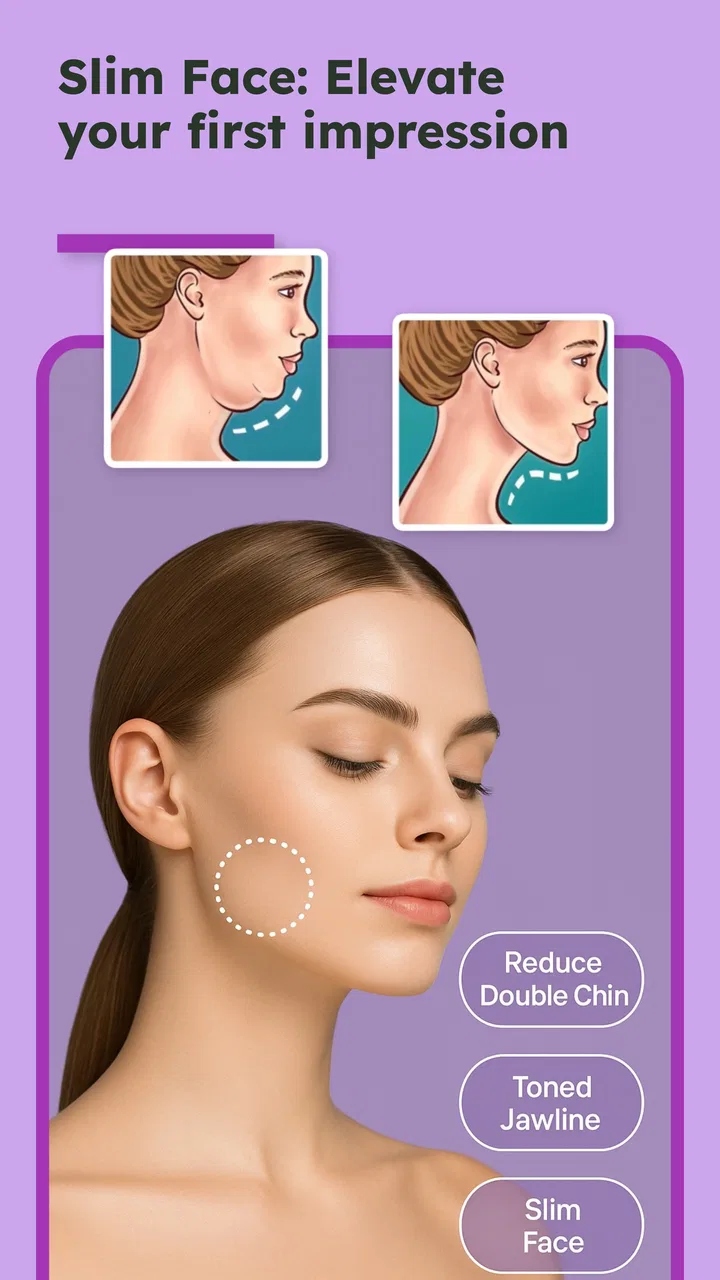
Slim Face - remove double chin
- 0.0
- Rating
- 10.00K
- Installs
- Free
- Price

 Analysis by App-foxy
I tried Slim Face - remove double chin as a straightforward beauty app rather than expecting a complete fitness program. Its purpose is clear: it focuses on facial workouts intended to support a slimmer-looking face, a more defined jawline, and less visible fullness beneath the chin. That narrow focus is both its most appealing quality and its main limitation. If you want a small routine you can fit into a quiet part of the day, it is easy to understand. If you expect a clinically guided transformation or a full-body health plan, you will probably need something broader.
The app comes from RbxSkin and is available free of charge in the beauty category. It is aimed at an Everyone audience, so its basic idea is accessible to a wide range of users. The current release is version 1.0.0, and it runs on Android devices using version 5.0 or later. With over 10K installs, it is still a relatively small app, which makes my experience feel more like using a focused tool than joining a large fitness platform.
How the app feels to use in everyday situations
I find the app easiest to judge as a small, private routine rather than a dramatic makeover tool. Its facial-workout focus can fit beside an existing skincare habit, but the useful question is whether the movements feel comfortable and repeatable in your own space. I’d start gently and use the experience to decide what pace works for me; that leads naturally to the practical trade-offs.
You May Also Like

 Pandora - Music & Podcasts
Pandora’s Music Is Easy to Start, but Harder to Recover
Pandora’s strength is its low-effort path from a seed to a station. Its weak spot is how much confidence it asks you to place in connection, setup, and quiet recovery.

 AccuWeather: Weather Radar
AccuWeather Review: A Quick, Clear Forecast for Everyday Decisions
For everyday plans, the best forecast is the one you can understand quickly. AccuWeather makes rain timing, radar, and local conditions easy to act on, with a few trade-offs.

 Hill Climb Racing
Why Hill Climb Racing Still Turns Crashes Into One More Run
A tiny car, a bumpy hill and one more upgrade: Hill Climb Racing keeps resurfacing because its simple chaos makes every near-miss feel personal.

 AliExpress - Shopping App
AliExpress Makes Global Shopping Feel Personal, but Shoppers Bear the Risk
AliExpress turns a global marketplace into a pocket-sized discovery engine. Its reach is useful, its shopping loop compelling, and its trade-offs easy to miss.

 Lords Mobile: Kingdom Wars
Lords Mobile Is a Kingdom-Building Routine, Not a Quick Match
A case-by-case verdict on the building, battles, device demands, and social commitments that make Lords Mobile rewarding for some players and exhausting for others.

 PDF Scanner app - TapScanner
TapScanner Makes Paperwork Easier to Capture, Check, and Share
TapScanner makes scanning with a phone feel less like a rescue operation and more like a dependable step in getting work done. Its capture tools are useful, though not flawless.
More From Our News Desk
View All News


Readability and navigation come first
The first thing I noticed is that the concept does not require much explanation. A facial workout app should not make me search through layers of menus before I can begin, and this one benefits from keeping its purpose close to the surface. The wording around a slimmer face and a more chiseled appearance gives the user an immediate sense of what the routine is meant to address.
That clarity matters for people who are not comfortable with complicated fitness applications. Someone opening the app during a short break should be able to understand its role without learning a new system of categories, equipment settings, or training terminology. In my view, this makes it more approachable than a general workout app where facial exercises are buried among strength, cardio, stretching, and nutrition sections.
At the same time, simple navigation should not be confused with complete guidance. Facial movements can be subtle, and a user may still wonder whether the mouth, cheeks, neck, or chin are positioned correctly. The app’s central promise is easy to grasp, but the usefulness of each exercise depends heavily on how clearly the instructions are presented and whether the user can follow them without guessing.
I recommend reading each instruction before starting instead of rushing straight into repetition. Facial exercises are small movements, so it is easy to perform them too forcefully or involve the neck unnecessarily. A slower first attempt is more useful than trying to imitate a fast routine while looking at the screen.
For readability, the best setup is a bright room with the phone placed at eye level. That avoids bending the neck toward a low table and makes it easier to check posture. It also helps users who need larger visual targets or more time to process instructions. I found that preparing the space before opening the routine reduces the temptation to keep adjusting the device while exercising.
Motor and sensory considerations
Facial workouts are physically lighter than many conventional exercise programs, but they are not automatically effortless for everyone. The movements may involve controlled smiling, cheek tension, lip positions, jaw awareness, or neck engagement. A person with limited facial mobility, jaw discomfort, muscle fatigue, or difficulty holding a posture may need to modify the pace or stop altogether.
That is an important distinction: low-impact does not mean universally suitable. I would treat the exercises as optional movements rather than a test of flexibility or endurance. If a motion causes pain around the jaw, temples, teeth, neck, or ears, I would not push through it simply because the app presents it as part of a routine.
Users with tremors or reduced fine motor control may find the app easier than a workout requiring weights or rapid hand movements, because the main activity is performed with the face. However, maintaining a steady posture and copying a precise expression can still be difficult. A practical workaround is to use a chair with back support and perform fewer repetitions while concentrating on comfort.
Visual users may appreciate being able to watch a demonstration or follow on-screen prompts, but the experience can be less comfortable for people who are sensitive to bright displays, quick changes, or prolonged screen focus. Lowering screen brightness and taking pauses can make the routine less tiring. I also prefer using the app without headphones when possible, since facial exercise does not inherently require sound and removing audio can make the session less distracting.
People with hearing difficulties should not have to depend on audio alone for a movement-based routine. The app is more inclusive when its written or visual guidance is enough to complete an exercise. If an instruction is only understandable through sound, that creates an avoidable barrier. I would check the screen carefully before beginning and avoid assuming that every cue will be obvious from the movement itself.
What happens when the setting is not ideal
A realistic use case is a short session after getting ready for work. I can place the phone near a mirror, sit or stand comfortably, and complete a few facial movements before leaving. This works because the app does not require a gym, special clothing, or exercise equipment. It also suits someone who feels self-conscious about exercising in public and wants a private routine at home.
Privacy still matters. Facial exercises can look unusual to other people, so using the app on public transport, in a shared office, or around family members may feel awkward even though the physical effort is small. For that reason, I see it as most practical in a bedroom, bathroom, or quiet corner where the user can concentrate without being watched.
The app can also fit into a low-energy day. If I do not have the time or motivation for a long workout, a short facial routine feels less demanding than changing clothes and setting up a full exercise session. That convenience is a genuine strength, but it should not encourage the idea that facial movements replace general physical activity. I would use it as a small addition to a broader routine, not as my only form of exercise.
Travel is another situation where the format makes sense. A phone is easier to pack than resistance bands or a yoga mat, and the exercises can be done while seated. Still, a hotel room with poor lighting or a crowded environment may make it harder to follow visual cues. The most reliable approach is to prepare the routine when the user has enough privacy and a stable place to sit.
For someone with limited stamina, the ability to pause is more important than completing a session exactly as displayed. I would divide a routine into smaller parts, rest between movements, and stop if the face or neck becomes tired. This approach may reduce the intensity, but it makes the app more usable in real life.
What the app can and cannot realistically change
The wording around removing a double chin and reducing face fat needs a sensible interpretation. Facial workouts may help a user become more aware of posture and muscle engagement, and repeated practice may make the face feel more active or toned. They cannot selectively remove fat from one area on demand. Changes in facial fullness are influenced by overall body composition, genetics, age, fluid retention, and other factors outside the app.
I would therefore avoid judging the app after only a few sessions. A mirror can also be misleading because lighting, camera angle, head position, and facial expression change the appearance of the chin dramatically. If I wanted to observe a gradual difference, I would use the same neutral lighting, camera height, and relaxed expression each time rather than comparing random selfies.
This is one of the most useful ways to use the app: as a consistency aid. The routine can remind me to spend a few minutes on posture and facial movement, while realistic expectations prevent disappointment. It is not a replacement for medical advice, weight-management support, treatment for jaw problems, or professional guidance about persistent swelling or pain.
Compared with a general facial massage app, this one is more exercise-oriented. Massage may feel better for relaxation or temporary tension relief, while active movements demand more participation. Compared with a full fitness app, Slim Face is less comprehensive but also less intimidating. A general platform is the better choice for someone who wants strength training, cardio, mobility work, meal planning, or progress tracking across the whole body.
That trade-off is central to my opinion. The narrow focus makes the app easy to approach, especially for beginners who do not want a large library. It also means that users looking for detailed anatomy education, individualized coaching, or a complete wellness plan may quickly outgrow it.
Small workflow changes that improve the experience
My first practical tip is to establish a fixed trigger instead of relying on motivation. Linking the routine to brushing my teeth, preparing skincare, or winding down at night gives it a natural place in the day. The app is most useful when it becomes a repeatable habit rather than something opened only when I notice a photo I dislike.
My second tip is to keep the jaw relaxed between movements. Many people unconsciously clench their teeth when concentrating, which can turn a gentle facial routine into an uncomfortable one. I would keep the teeth slightly apart unless an instruction specifically requires another position, and I would check the shoulders and neck before continuing.
A third useful adjustment is to practice in front of a mirror only during the learning stage. A mirror can help me understand whether I am lifting one side of the mouth more than the other, but staring at my reflection throughout the entire session can create unnecessary self-criticism. Once the movement is familiar, looking at the screen or closing my eyes briefly may make the routine feel calmer.
Another overlooked trade-off is social comfort. A user who shares a room may find the expressions embarrassing, even though the app itself is simple. Scheduling the routine when others are out, or treating it as a private self-care activity rather than a public workout, can make adherence easier. This is not a technical feature, but it has a direct effect on whether the app becomes part of daily life.
Who should use it and who should choose something else
I think the app is a good fit for someone who wants a free, focused introduction to facial workouts and prefers short, equipment-free activities. It may also suit users who are curious about facial movement but feel overwhelmed by large fitness platforms. Beginners can benefit from the limited scope because there are fewer decisions to make before starting.
It is less suitable for anyone expecting guaranteed fat loss from the chin area, rapid reshaping, or professional assessment. Users with jaw pain, recent dental work, facial injury, neurological conditions affecting movement, or unexplained swelling should seek appropriate medical guidance before experimenting with exercises. The Everyone age label describes the app’s general audience; it does not make every movement appropriate for every individual situation.
I would also steer highly motivated fitness users toward a broader program. Facial exercise can complement walking, resistance training, mobility work, and balanced nutrition, but it cannot cover those needs. Someone who wants measurable strength progress, heart-rate training, or structured coaching will find more value in a dedicated fitness platform.
RbxSkin’s app is also a better match for Android users with a compatible older device than many newer wellness tools that demand recent operating systems. Its support for Android 5.0 or later gives it a wider technical reach, although the actual comfort of reading and following instructions will still depend on the phone’s display and performance.
My inclusive verdict
After using it as a focused self-care tool, I see Slim Face as approachable rather than comprehensive. Its free price removes a common first barrier, its beauty focus is immediately understandable, and its facial-workout format can fit into private spaces, travel, and low-energy days. The app is especially appealing to people who want to try a simple routine without buying equipment or committing to a large subscription-based system.
Its inclusive potential depends on how the user adapts the session. Sitting instead of standing, slowing the movements, increasing screen readability, choosing a quiet environment, and taking breaks can make the experience more comfortable across different abilities and circumstances. Those adjustments are practical, but they also reveal the app’s limits: it should not be treated as a substitute for individualized instruction when movement, pain, vision, hearing, or stamina presents a serious challenge.
My final recommendation is cautious but positive. Try it if your goal is to build awareness of facial movement and add a small routine to your day. Keep expectations realistic, measure progress consistently rather than through random photos, and stop when anything hurts. The best reason to use this app is convenience, not a promise of instant physical change. For a free beauty app with a tightly defined purpose, that is enough to make it worth trying, provided you understand where a broader fitness tool or professional advice would serve you better.
FAQs for Slim Face - remove double chin
01What is Slim Face - remove double chin and how does it work?
Slim Face is a mobile app designed to help users reduce the appearance of a double chin through facial exercises and tutorials. It provides step-by-step guidance on performing targeted exercises that aim to tone the muscles under the chin. Additionally, the app offers personalized workout plans and progress tracking to motivate users on their journey.
02Is Slim Face - remove double chin safe to use?
Yes, Slim Face is generally safe for most users. The exercises are non-invasive and do not require any special equipment. However, if you experience discomfort or have any underlying health concerns, it is advisable to consult with a healthcare professional before continuing with the exercises. The app also includes safety tips to ensure a positive user experience.
03Can I expect immediate results from using Slim Face?
While some users may notice subtle changes within a few weeks, significant results usually take longer and depend on consistent use of the app. Slim Face emphasizes the importance of regular exercise routines, recommending users follow the suggested plans daily for optimal results. Patience and persistence are key to achieving noticeable improvements.
04Are there any costs associated with Slim Face - remove double chin?
Slim Face offers a free version with basic features, allowing users to try out some exercises without any cost. However, for access to premium features such as personalized workout plans and advanced progress tracking, users can opt for a subscription. The app provides clear information about pricing and subscription options within its platform.
05Is Slim Face compatible with both Android and iOS devices?
Yes, Slim Face is available for both Android and iOS devices. Users can download it from the Google Play Store for Android devices and the Apple App Store for iOS devices. It is designed to work smoothly across different devices, ensuring a seamless experience regardless of your operating system.
Pros
- Easy-to-use interface for quick edits.
- Variety of tools for facial adjustments.
- Real-time preview before saving edits.
- Minimal lag during image processing.
- Supports high-resolution image exports.
Cons
- Limited free features; many require purchase.
- Occasional ad interruptions.
- No batch processing for multiple photos.
- Requires stable internet for best performance.
- Limited non-facial editing tools.

Slim Face - remove double chin
Gallery